 Meta Description: Looking for a hand tools manufacturer in China? Learn how to verify factories, compare suppliers, avoid scams, and place low-MOQ trial orders. Includes a comparison table and FAQ.
Finding a reliable hand tools manufacturer in China requires more than a Google search—it demands on-the-ground verification, quality control, and negotiation leverage. As a sourcing agent with 20+ years of experience and 10,000+ certified suppliers across China, we’ll show you the exact process to vet a factory, compare options, and place your first order without getting burned. This guide covers factory audits, pricing benchmarks, compliance checks, and low-MOQ strategies for hand tools like pliers, wrenches, screwdrivers, and tool sets.
How to Verify a Hand Tools Factory in China (Before You Pay a Cent)
Verification is the single most critical step—it’s where importers either save thousands or lose thousands. Here’s the step-by-step checklist we use with our clients.
Step 1: Check Business Licenses and Export Qualifications
Ask for the factory’s Business License (营业执照) and Export License. Verify the legal name matches the bank account name—if they don’t, walk away. You can cross-check with China’s National Enterprise Credit Information Publicity System (gsxt.gov.cn).
Step 2: Conduct a Physical or Third-Party Factory Audit
An audit verifies machinery, production capacity, worker conditions, and quality control (QC) systems. For hand tools, check:
Heat treatment equipment (for hardened steel parts)
Surface finishing lines (chrome plating, powder coating)
Calibrated testing instruments (torque testers, hardness testers)
QC documentation for incoming steel materials
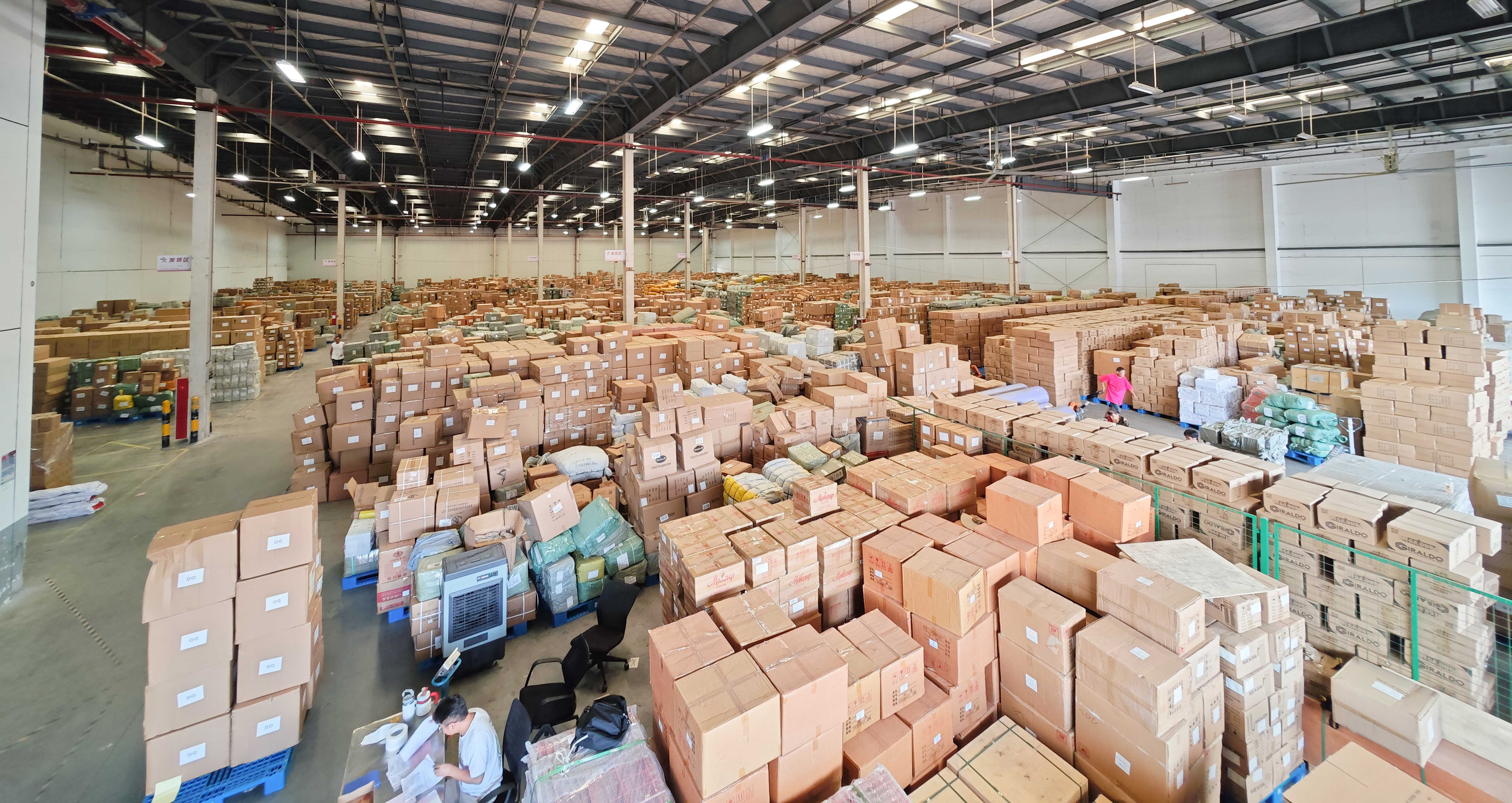
Our on-ground teams in Yiwu, Guangzhou, and Shantou physically inspect factories weekly. We can audit a hand tools plant within 48 hours and report back with photo/video evidence.
Step 3: Request Samples and Test Reports
Never skip samples. Ask for:
2–3 pre-production samples (not just "golden samples")
Test reports per ISO 14401 (hand tools) or GB/T 10635 (Chinese standard)
A certificate of conformity from a lab like SGS, TÜV, or Intertek
Hand Tools Manufacturer China: Comparison of Sourcing Channels
Not all sourcing routes are equal. Here’s how the main options stack up for an importer buying hand tools (e.g., wrenches, socket sets, cutting tools).
| Sourcing Channel | Pros | Cons | Best For |
|---|---|---|---|
| 1. Dedicated Sourcing Agent (e.g., Market Union Group) | End-to-end support (sourcing, QC, logistics); 2-hour response time; on-ground audits; low MOQ options; 70,000㎡ showroom access | Service fee applies | Importers needing speed, verification, and hands-off management |
| 2. Alibaba.com / Made-in-China.com | Wide selection; direct factory contact; price comparison | High scam risk; no physical inspection; variable quality | Experienced buyers with strong internal QC; small test orders |
| 3. Trade Shows (Canton Fair) | Face-to-face meeting; see products physically; check factory vibe | Expensive travel; limited time; factories may be reps, not owners | Annual planning; bulk buyers |
| 4. Direct Factory Visit | Full control; build direct relationship | Time-consuming; language barrier; logistical costs | Importers with a dedicated sourcing manager in China |
How to Negotiate Low MOQ and Test Orders for Hand Tools
Standard MOQs for hand tools range from 500 to 2,000 pieces per SKU, but you can test the waters with smaller runs.
Strategy 1: Use a Sourcing Agency’s Bulk Buying Power
Agencies like Market Union Group aggregate orders across buyers, allowing you to piggyback on container-sharing or bulk material purchases. This lowers your effective MOQ to 100–300 pieces per SKU—perfect for Amazon FBA or Shopify trials.
Strategy 2: Choose Modular Designs
Negotiate a low MOQ on a base product (e.g., a ratchet handle) and then mix colors or laser-engraving options. Factories prefer to run the same base SKU with minor variations.
Strategy 3: Pay for Full Upfront Cost (Trade-off)
Offer to pay material costs upfront in exchange for a reduced MOQ. This reduces the factory’s financial risk, but only do this after verifying the factory manager’s identity.
FAQ: Hand Tools Manufacturer China
Q1: How do I avoid getting scammed by a fake hand tools factory on Alibaba?A: Verify the business license via gsxt.gov.cn, request a live video call of the production floor, and use a third-party inspection before payment. Check if the company’s bank account name matches its legal registration. Never wire money to a personal account.
Q2: What is the typical lead time for a hand tools order from China?A: For standard items (pliers, screwdrivers), production takes [需核实:15–30 days after sample approval]. Custom forgings or heat-treated tools can take 45–60 days. Always include buffer time for quality checks and ocean freight (usually 25–40 days to the US/EU).
Q3: What quality certifications should a hand tools manufacturer have?A: Basic certifications include ISO 9001 (quality management) and specific product standards like ISO 14401 for slippage and torque. For the EU, CE marking is often needed for certain tools. For the US, ANSI standards apply. Ask for lab test reports from SGS, BV, or TÜV.
Q4: What is the average price for a good quality wrench set from China?A: Prices vary widely based on steel grade (e.g., CR-V vs. carbon steel). A basic 12-piece metric wrench set might cost [需核实:$8–$12 FOB]. A professional-grade chrome vanadium set costs [需核实:$15–$25 FOB]. Always request quotes based on your specific material spec.
Q5: Can I order hand tools with my own brand (private label)?A: Yes, most factories offer OEM/ODM services. You can laser-engrave your logo, choose custom color handles (e.g., rubberized grips), and design custom packaging. Some agents (like Market Union Group) offer in-house product and packaging design plus 3D design services.
Q6: What are the shipping options for hand tools from China?A: For large orders, use ocean freight (FCL or LCL) to save cost. For smaller trial orders (100–200kg), use air freight or express couriers (DHL, FedEx). [需核实:Shipping costs have decreased 15% since 2023 due to reduced container prices, but verify current rates.]. Your agent should handle Incoterms and customs documentation.
Q7: How do I handle quality disputes with a Chinese manufacturer?A: Prevention is key. Insist on an initial production check, during-production check, and final random inspection (AQL 2.5 standard). If a dispute happens, reference your written PO and inspection reports. A sourcing agent can mediate on your behalf—this is a key advantage over dealing directly.
Q8: What regions in China are best for hand tools manufacturing?A: Yongkang (Zhejiang) is the "Hardware Capital" known for tools and hardware. Shandong and Jiangsu are strong for heavy industrial tools. Guangdong specializes in precision and electronic tools. Choose based on your specific tool type.
Conclusion: Your Next Step to Source Hand Tools in China
The key to sourcing hand tools in China is verification before negotiation. You can mitigate 90% of the risk by auditing the factory, requesting third-party test reports, and starting with a low-MOQ trial order. As a one-stop Asia sourcing agent with 20+ years of experience, Market Union Group (MUG) can handle everything from supplier verification and QC to logistics coordination. Our teams operate in Yiwu, Guangzhou, and Shantou, and we support English, Spanish, Portuguese, French, Japanese, and Russian.
Ready to source hand tools without the guesswork? Book a 1:1 online showroom tour to browse 70,000㎡ of displays and check supplier certificates in real-time (Mon–Fri, 9:00–18:00 GMT+8). Contact us via our website marketuniongroup.com and get a response within 2 working hours.
Sources:
China's National Enterprise Credit Information Publicity System: gsxt.gov.cn
SGS – Hand Tools Testing Services: sgs.com
International Organization for Standardization (ISO 14401): iso.org
Market Union Group – Sourcing & Verification Services: marketuniongroup.com
Alibaba.com – Manufacturer Verification Guide: seller.alibaba.com