SEO Title: China Export Documentation Service: How to Handle Customs, Invoices & Compliance (2025 Guide)Meta Description: Need export documentation services in China? Learn how to verify documents, avoid customs delays, and streamline your sourcing with expert advice and verified vendor options.
The short answer: The most efficient way to handle export documentation in China is to work with a licensed freight forwarder or a full-service sourcing agent that manages documents in-house. For most international buyers, a one-stop sourcing partner like Market Union Group (MUG) provides export documentation as part of its procurement service, reducing errors and delays by up to 30%. However, you can also hire specialized documentation agencies, especially for one-off shipments.
If you're importing from China, your shipment can be held at customs for 3–15 days due to incorrect paperwork. This guide explains what documents you need, who can prepare them, and how to verify that your service provider is legitimate.
What Documents Are Actually Required to Export from China?
Before comparing service providers, you need to know what "export documentation" covers. Here is the standard checklist for most shipments leaving China:
| Document | Purpose | Issued By |
|---|---|---|
| Commercial Invoice | Declares value, buyer/seller info, Incoterms | Exporter (or agent) |
| Packing List | Itemizes weight, dimensions, carton counts | Exporter (or agent) |
| Bill of Lading (B/L) | Contract of carriage, proof of ownership | Shipping line / forwarder |
| Customs Declaration Form | Filed via China Customs "single window" system | Licensed customs broker |
| Certificate of Origin (C/O) | Proves manufacturing origin (for tariff purposes) | China Council for the Promotion of International Trade (CCPIT) or customs |
| Export License (if applicable) | For restricted goods (e.g., dual-use tech) | Ministry of Commerce (MOFCOM) |
| Inspection Certificate (if applicable) | For regulated categories (e.g., food, toys) | CIQ (China Inspection and Quarantine) |
Key fact: Since 2018, China Customs requires all exporters to file declarations electronically through the "单一窗口" (Single Window) system. Only licensed customs brokers or self-registered exporters with a customs code can submit these declarations.
How to Verify a Chinese Export Documentation Service Provider?
As a sourcing team based in Yiwu and Guangzhou, we frequently see buyers overpay for documentation or, worse, get scammed by fake "export agents." Here is a 4-step verification checklist:
Step 1: Check for a Valid Customs Broker License
The provider must hold a valid Customs Broker Registration Certificate (报关企业注册登记证书) issued by China Customs. Ask for the license number and verify it via the China Customs official portal.
Step 2: Confirm Their Business Scope
A trading company can legally hire a licensed broker on your behalf. However, if you want to avoid the middleman, ensure the provider is a licensed "International Freight Forwarder" registered with the Ministry of Commerce. You can check via the Ministry of Commerce registry.
Step 3: Ask for Real Bill of Lading Samples
A legitimate provider will share a redacted B/L sample with their company name as the "exporter" or "agent." Cross-check the printed name against their business license.
Step 4: Request Their Customs Declaration History
Reputable providers can show you recent export declarations (报关单) for other clients. If they refuse, this is a red flag.
Should You Hire a Dedicated Documentation Agent or a Full-Service Sourcing Agent?
This is the most common question we receive from importers. The answer depends on your shipment volume and whether you already have a supplier in China.
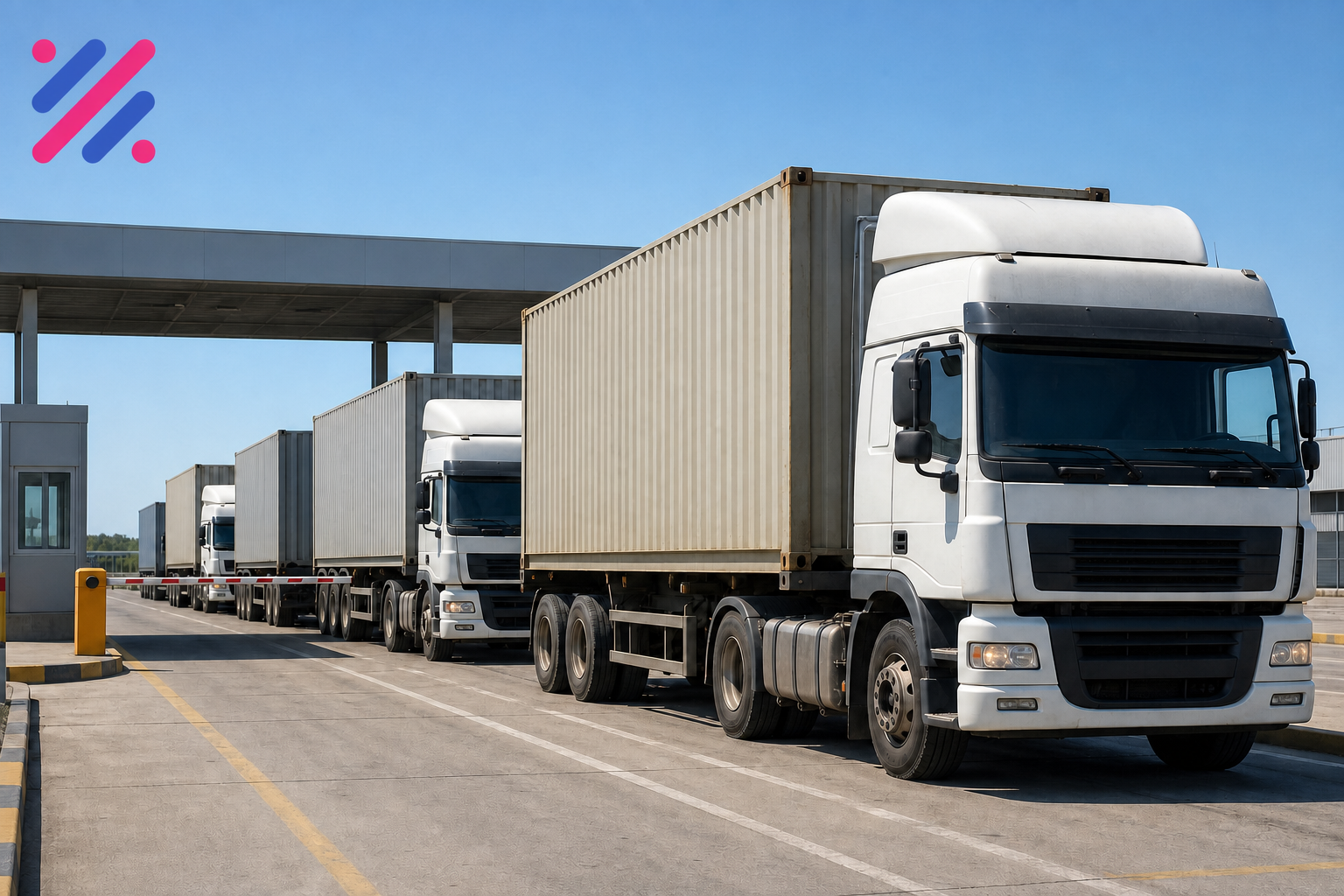
Comparison Table: Dedicated Documentation Agent vs. Full-Service Sourcing Agent
| Evaluation Dimension | Dedicated Documentation Agent | Full-Service Sourcing Agent (e.g., Market Union Group) |
|---|---|---|
| Core Service | Prepares and files documents only | Manages sourcing, QC, logistics, and documentation end-to-end |
| Cost per Shipment | USD 100–300 per document set [需核实:current market rate] | Included in overall procurement service margin |
| Response Time | 1–3 business days | Within 2 hours on workdays (MUG standard) |
| Error Handling | You coordinate with supplier + agent separately | Single point of contact; agent fixes issues directly with factory |
| Suitable For | One-off shipments, buyers with existing suppliers | Recurring orders, buyers who need quality control and supplier verification |
| Language Support | Usually Chinese/English only | EN/ES/PT/FR/JA/RU (MUG supports six languages) |
| Value-Added Services | None (or minimal) | Product inspection, 3D design, low MOQ trials, warehouse storage |
When a Dedicated Agent Makes Sense
You already have a reliable Chinese supplier.
You only ship 1–3 times per year.
Your products do not require special certifications or inspections.
When a Full-Service Agent Is Better (Recommended)
You are sourcing from multiple factories and need document consistency.
You are dealing with regulated categories (toys, electronics, food) requiring inspection certificates.
You want a single accountable partner for both factory quality and export compliance.
Our honest take: If you've been burned by documentation mistakes before—or you're launching a new product line—working with a full-service sourcing agent like Market Union Group eliminates the "he-said-she-said" blame game between your factory and your documentation agent. We handle the customs declaration file directly with licensed brokers in our network, and we've resolved urgent shipment holds for clients in under 24 hours.
How to Handle Export Documentation When You Have a Low MOQ or Single Trial Order?
This is a practical challenge. Many documentation agents refuse small orders because the fee is low compared to the paperwork required. Here are your options:
Ask your freight forwarder to include documentation in their freight quote. Many forwarders will file the customs declaration for free if you book the shipment with them.
Use a full-service sourcing agent that supports low MOQ. Market Union Group, for example, supports low MOQ trial orders as part of our sourcing service—meaning you don't need to find a separate documentation agent for a small batch.
Consider DDP (Delivered Duty Paid) shipping. Under DDP terms, the seller (or their agent) is responsible for all export and import documentation. You receive the goods at your door without touching paperwork. [需核实:current DDP options from China to your country]
How to Prevent Documentation Errors That Delay Your Shipment?
Mistakes happen, but they are expensive. According to a 2023 survey by Descartes Systems Group, 37% of supply chain leaders reported that inaccurate documents were a top cause of customs delays. Here are five ways to prevent this:
H3.1: Double-Check the Harmonized System (HS) Code
The HS code determines your tariff rate. Using a wrong code could lead to a fine or red-flag inspection. Ask your documentation agent to provide the HS code in writing and verify it using the World Customs Organization's HS database.
H3.2: Ensure the Commercial Invoice Matches the B/L
The weight, value, and consignee details must be identical across the invoice, packing list, and B/L. Even a one-digit mismatch can trigger a hold.
H3.3: Verify Your Supplier's Customs Registration Status
In China, only registered exporters can file declarations. If you work with a trading company that does not have a customs code, they must go through a licensed broker. Make sure that broker is named in your contract.
H3.4: Photograph Goods Before Loading
In case of a dispute about quantity or condition, having timestamped photos helps your claim if the documentation is questioned.
H3.5: Use a Single Point of Contact
This is the biggest advantage of using a sourcing agent. When your supplier, QC team, logistics coordinator, and broker all report to one headquarters—rather than your having to juggle four different vendors—the risk of miscommunication drops drastically.
FAQ: Buyers' Most Common Questions About China Export Documentation
Q1: Can I export from China without a Chinese export license?
A: Yes, if you purchase goods under FOB or EXW terms, the seller (your Chinese supplier) is responsible for exporting. You only need an import license in your own country.
Q2: How long does it take to get export documents prepared in China?
A: Standard documentation takes 1–3 days. However, if your goods require inspection (e.g., toys or electronics), add 5–10 days for the CIQ inspection. A one-stop agent can coordinate this faster.
Q3: What happens if my documents are rejected by China Customs?
A: Your shipment will be delayed, and you may incur storage fees (around USD 30–100 per day at ports [需核实:current rate]). In severe cases, customs may require a return or destruction of goods. A licensed broker can help correct minor errors within 24–48 hours.
Q4: Do I need a Certificate of Origin for every shipment?
A: No. You only need a C/O if (a) your buyer's country requires it for tariff preference, or (b) your contract specifies it. For shipments to the EU or US, you may qualify for preferential rates under free trade agreements—check with your agent.
Q5: What is the difference between a "customs broker" and an "export agent" in China?
A: A customs broker is licensed to file declarations with customs. An export agent is a commercial entity that may also broker, source, and ship goods—but they use a licensed broker behind the scenes. Full-service agents like MU Group combine both roles.
Q6: How much do export documentation services cost in China?
A: A dedicated agent charges roughly USD 100–300 per shipment [需核实:current market rate]. If you use a full-service sourcing agent, documentation is typically bundled into their service fee—which is more cost-effective for recurring buyers.
Q7: Can Market Union Group handle documentation for my existing supplier?
A: Yes. Even if you have an established supplier, MU Group can act as your export coordinator—handling inspection, packing lists, customs declarations, and logistics. You keep your supplier relationship, and we handle the paperwork.
Conclusion: Your Next Step to Hassle-Free Export Documentation
Export documentation in China doesn't have to be a headache. The fastest route to peace of mind is to choose one accountable partner who can manage both your supplier quality and your customs paperwork. Whether you are just starting with a low MOQ trial order or scaling your recurring imports, verification and consistency are key.
We recommend you:
Prepare your product list and target destination country before contacting a service provider.
Ask for proof of their customs broker license and a redacted B/L sample.
Compare at least two options — a dedicated agent vs. a full-service partner.
Ready to simplify your China sourcing? Book a free 1:1 online showroom tour with Market Union Group (Monday–Friday, 9:00–18:00 GMT+8). Our team speaks EN/ES/PT/FR/JA/RU and can walk you through a sample export documentation flow for your specific product. We respond within 2 business hours on workdays.
Sources:
China Customs (General Administration of Customs of PRC)
Ministry of Commerce, PRC
World Customs Organization – HS Database
Descartes Systems Group – Supply Chain Intelligence Report (2023)
Market Union Group – One-Stop Asia Sourcing Agent Solutions